Surgical procedures
Partial nail avulsion
Partial nail matrixectomy/ Phenol matrixectomy
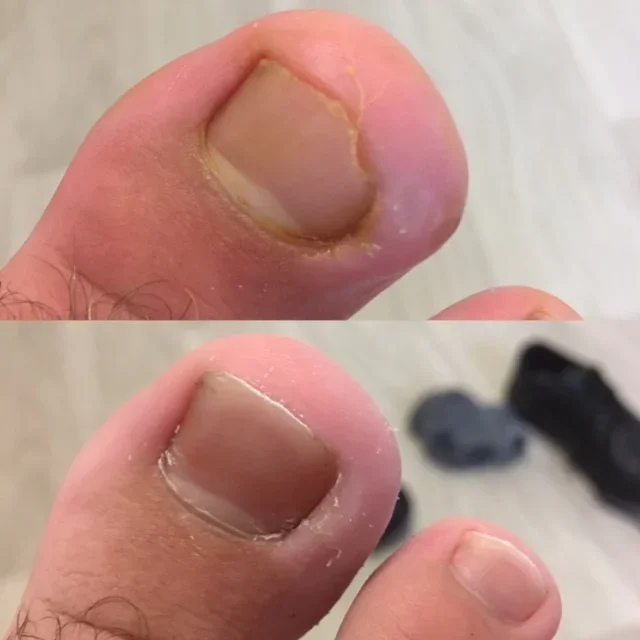
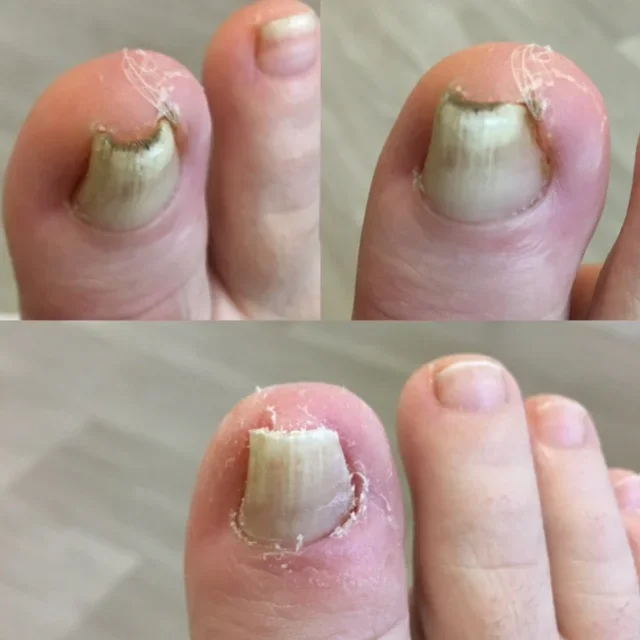
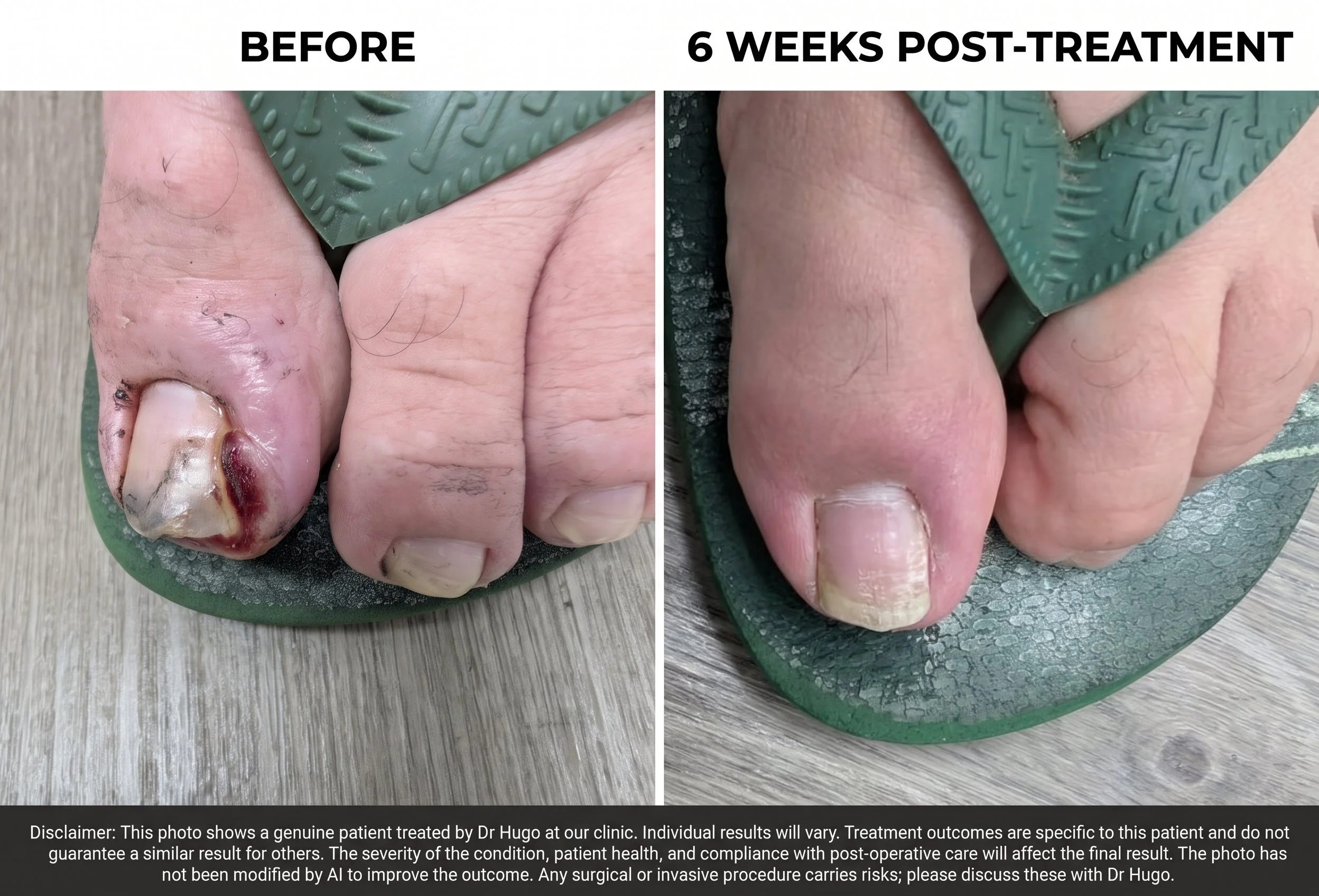
These images are genuine patients treated by our clinic and should not be reproduced
Partial nail avulsion is a minor surgical procedure used to treat an ingrown toenail. It involves removing the narrow portion of the toenail that is pressing into or growing into the surrounding skin. The procedure aims to relieve pain, reduce irritation and allow the affected area to heal.
Partial nail avulsion is commonly performed under local anaesthetic, which numbs the toe during the procedure. It may be recommended when an ingrown toenail causes persistent discomfort, inflammation or recurrent symptoms despite conservative treatment.
How Is Partial Nail Avulsion Performed?
After the toe has been numbed with local anaesthetic, the surgeon carefully separates and removes the affected edge of the nail while preserving the remaining healthy nail. The area is then cleaned and dressed to support healing.
In cases where an ingrown toenail repeatedly returns, the surgeon may recommend treating the corresponding section of the nail matrix, which is the tissue responsible for nail growth. This additional procedure, known as a partial nail matrixectomy, aims to reduce the likelihood of the troublesome nail edge growing back.
What Is the Recovery After Partial Nail Avulsion?
Partial nail avulsion is generally performed in chair, allowing patients to return home the same day. Mild tenderness, swelling or wound discharge may occur during recovery.
Healing time varies depending on whether the nail matrix is treated, the severity of the condition and individual health factors. Patients should follow instructions regarding wound care, dressings, footwear and physical activity.
When Is Partial Nail Avulsion Recommended?
Partial nail avulsion may be appropriate for patients experiencing:
Persistent pain or tenderness around the toenail
Redness and inflammation of the surrounding skin
Recurrent ingrown toenails
Difficulty walking or wearing comfortable footwear due to nail pain
An ingrown toenail that has not improved with conservative treatment
A consultation with our practitioners can help determine whether partial nail avulsion alone or partial nail avulsion with matrix treatment is the most suitable option.
Partial Nail Avulsion for Ingrown Toenails
Partial nail matrixectomy
A partial nail matrixectomy with phenol is a minor surgical procedure used to treat persistent or recurrent ingrown toenails. It involves removing the affected edge of the toenail and applying phenol, a chemical agent, to the corresponding section of the nail matrix (the tissue responsible for nail growth).
The aim of this procedure is to prevent the troublesome edge of the nail from growing back, helping to relieve pain, reduce repeated inflammation and lower the risk of future ingrown toenails.
Phenol matrixectomy
A phenol matrixectomy is a commonly used technique in ingrown toenail surgery. Unlike partial nail removal alone, which allows the removed nail section to grow back, a matrixectomy treats the corresponding part of the nail root to reduce the likelihood of recurrence.
Phenol is carefully applied to the exposed section of the nail matrix to destroy its nail-producing tissue. This helps prevent that portion of the toenail from regrowing while preserving the remaining nail.
The procedure is usually performed under local anaesthetic, allowing the treatment to be carried out while the toe is numb.
How Is Partial Nail Matrixectomy with Phenol Performed?
The procedure generally involves the following steps:
Local anaesthetic: The toe is numbed to minimise discomfort during surgery.
Partial nail avulsion: The surgeon removes the narrow section of toenail responsible for pressing into the surrounding skin.
Phenol application: Phenol is carefully applied to the corresponding section of the nail matrix to reduce the likelihood of regrowth.
Wound care: The treated area is cleaned and dressed, and the patient receives instructions for wound care and recovery.
The procedure is generally performed as day surgery, allowing patients to return home on the same day.
What Are the Benefits of Phenol Matrixectomy?
Partial nail matrixectomy with phenol may be recommended for patients who experience persistent or recurrent ingrown toenails.
Potential benefits include:
Reduced recurrence: Treating the nail matrix lowers the likelihood of the affected nail edge growing back.
Relief from ongoing pain: Removing the offending nail edge helps relieve pressure on the surrounding skin.
Preservation of most of the nail: Only the affected section is removed, leaving the majority of the nail intact.
Treatment of recurrent ingrown toenails: The procedure may be suitable when conservative treatment or previous nail removal has not provided lasting relief.
As with any procedure, recurrence and complications remain possible, and outcomes vary between individuals.
What Is Recovery Like After Phenol Matrixectomy?
Recovery following phenol matrixectomy varies depending on the severity of the ingrown toenail, individual healing factors and the extent of the procedure.
Some tenderness, swelling and wound discharge can occur during healing. Because phenol causes a controlled chemical injury to the nail matrix, the treated area may take longer to stop weeping than after partial nail removal alone.
Patients should follow their surgeon's instructions regarding dressing changes, keeping the wound clean, appropriate footwear and returning to normal activities. Follow-up may be recommended to assess healing.
Who May Benefit from Phenol Matrixectomy?
A partial nail matrixectomy with phenol may be considered for patients with:
Recurrent ingrown toenails affecting the same toe
Persistent pain or inflammation around the nail edge
Difficulty walking or wearing shoes comfortably
Excess tissue developing around the affected nail
Symptoms that have not improved with appropriate conservative treatment
A surgical assessment is important to determine whether phenol matrixectomy is appropriate, particularly if there is significant infection or an underlying condition that may affect healing.
If you are experiencing ongoing pain or repeated episodes of an ingrown toenail, a consultation with our experts can help you understand your treatment options.
Partial nail matrixectomy with phenol may offer a longer-term solution by treating the section of nail responsible for recurring symptoms.
Book a consultation to discuss phenol matrixectomy and find out whether this procedure is suitable for your ingrown toenail.